Prison Parkour: Worm Race
- 3.0
- Rating
- 100.00K
- Installs
- Free
- Price

 Analysis by App-foxy
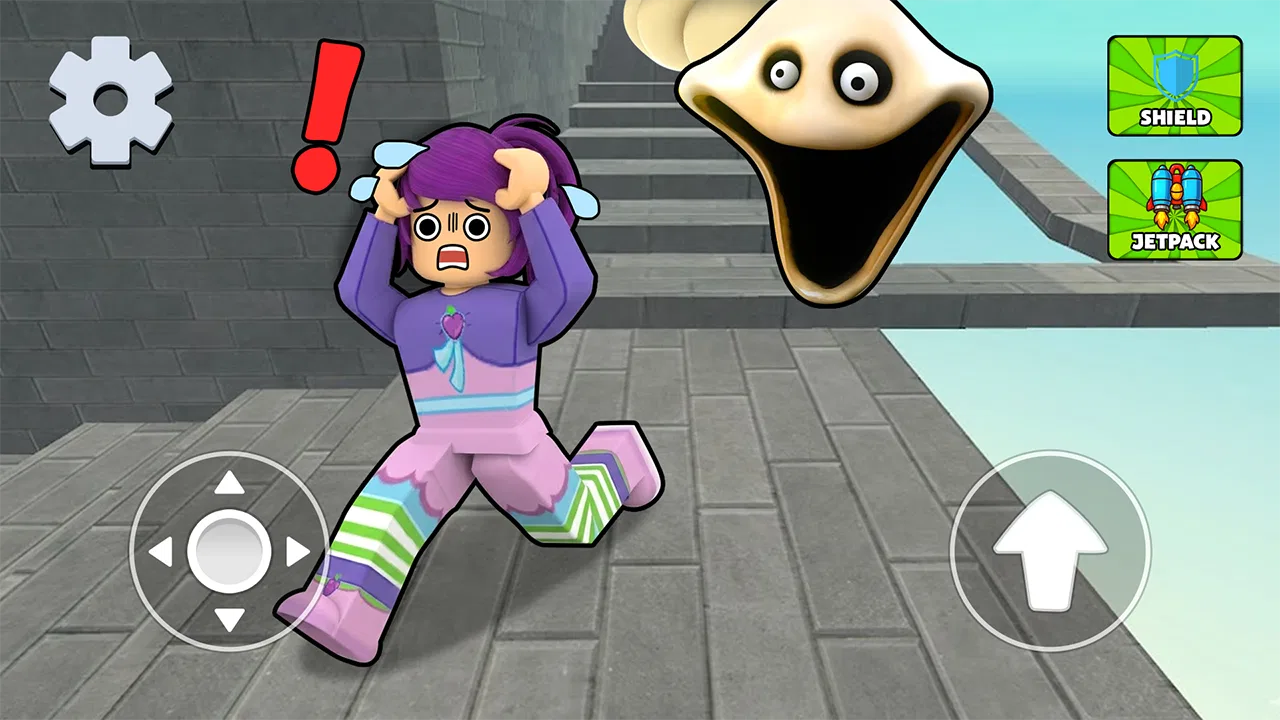
Prison Parkour: Worm Race is the kind of role-playing game I would open for a short burst rather than settle into for a long evening. Its central idea is easy to understand: move upward through a dangerous tower, avoid traps, and keep going while a hunting challenge pushes the pace. That simple setup gives it an immediate, arcade-like pull, especially when I want something that does not require a long explanation before playing.
I tested it with a practical question in mind: would it work on a shared household device, where different people may take turns and not everyone wants the same level of challenge? My answer is mixed but useful. It can be entertaining for quick personal sessions, and the prison-and-tower theme gives it a recognizable identity. At the same time, its modest average rating of 3.0 from around 57 ratings suggests that expectations should stay realistic. This is a free game from HIGAME GLOBAL, not a deep role-playing adventure built around a large world or a long story.
How it fits a shared-device routine
The strongest household use case is a short turn-taking session. One person can attempt a climb, stop after a failure or successful stretch, and hand the device to someone else without needing a complicated explanation. The objective is visible from the start, so a child, teenager, or adult can understand the basic appeal quickly: climb, react, and avoid being caught by the hazards.
You May Also Like

 AccuWeather: Weather Radar
AccuWeather Review: A Quick, Clear Forecast for Everyday Decisions
For everyday plans, the best forecast is the one you can understand quickly. AccuWeather makes rain timing, radar, and local conditions easy to act on, with a few trade-offs.

 Hill Climb Racing
Why Hill Climb Racing Still Turns Crashes Into One More Run
A tiny car, a bumpy hill and one more upgrade: Hill Climb Racing keeps resurfacing because its simple chaos makes every near-miss feel personal.

 AliExpress - Shopping App
AliExpress Makes Global Shopping Feel Personal, but Shoppers Bear the Risk
AliExpress turns a global marketplace into a pocket-sized discovery engine. Its reach is useful, its shopping loop compelling, and its trade-offs easy to miss.

 Lords Mobile: Kingdom Wars
Lords Mobile Is a Kingdom-Building Routine, Not a Quick Match
A case-by-case verdict on the building, battles, device demands, and social commitments that make Lords Mobile rewarding for some players and exhausting for others.

 PDF Scanner app - TapScanner
TapScanner Makes Paperwork Easier to Capture, Check, and Share
TapScanner makes scanning with a phone feel less like a rescue operation and more like a dependable step in getting work done. Its capture tools are useful, though not flawless.

 Block Blast!
 Shows How Much a Puzzle Game Can Leave Out
A quiet grid game shows why puzzle players increasingly value instant clarity, repeatable skill and low-pressure play—and where the genre still needs to catch up.
More From Our News Desk
View All News


I can imagine it working during a waiting-room visit, a quiet break, or a few minutes after dinner when several people want to try the same game without committing to a full campaign. The tension also makes it suitable for spectators. Someone watching can point out a trap or suggest waiting instead of rushing, even if that advice is not always correct. That small social element is more valuable here than any promise of long-term progression.
There is one important trade-off with shared use. A game based on timing and repeated attempts can become frustrating when players have very different patience levels. A confident player may want to retry immediately, while a younger or less experienced player may prefer to stop after a difficult section. I would agree on a simple turn rule before passing the device around: one attempt, or a fixed amount of time, then switch. That keeps a single difficult run from taking over the whole session.
The game’s short description, “Prison Parkour,” captures its compact identity better than a broad role-playing label does. I would not approach it expecting character conversations, equipment planning, or the kind of open-ended exploration found in larger role-playing alternatives. Its role-playing classification describes the store category, but the actual appeal is closer to a reflex challenge wrapped in a prison escape setting.
What the first sessions feel like
My first recommendation is to treat the opening attempts as practice rather than progress that must be protected. The tower format naturally encourages learning through failure. Instead of trying to move as quickly as possible, I found it more useful to read the next section before committing to a movement. The hunting pressure makes rushing tempting, but panic is usually the enemy in trap-heavy games.
A useful habit is to separate observation from movement. When a new section appears, take a brief moment to identify the safest route, then act decisively. This is especially helpful on a shared device because a second player can watch the screen and help identify what the first player missed. That turns the game into a small coordination exercise rather than a silent solo activity.
Another practical tip is to let the least experienced player try after watching someone else. A demonstration can explain the rhythm more clearly than verbal instructions. However, the experienced player should avoid taking over the device. The point of a shared session is not merely to reach the highest point; it is to let each person learn how the hazards behave and decide whether the challenge feels satisfying.
Boundaries before installing on a household phone
Because the game is free and carries an Everyone content rating, it may appear suitable for a broad household audience. I would still separate age suitability from personal comfort. A general age label does not tell me whether every child will enjoy the pressure of being chased or the repeated failure that comes with trap-based play. Some children find that tension exciting, while others become upset when an apparently successful run ends suddenly.
For a shared phone or tablet, I would establish a simple boundary around when it can be played. This is not because the game requires a complicated setup, but because quick arcade games can quietly stretch into repeated retries. A household rule such as “play during the break, not during homework” is more useful than assuming the short format will automatically stay short.
I would also make sure everyone understands whose turn it is before starting. Since this is an individual climbing challenge, the game itself may not provide the kind of household coordination that a board game or a deliberately multiplayer title offers. The coordination has to come from the people using the device. A visible turn order, even a spoken one, prevents arguments when a player is close to beating a difficult section.
Account boundaries matter as well. I would keep the game on the profile or device intended for casual play and avoid treating one person’s run as a shared family achievement unless everyone agrees. A child may feel ownership over a successful climb, while an older sibling may see the same device as available for another attempt. The safest approach is to clarify whether the session belongs to the current player or to the household before passing the phone around.
Coordination makes the simple design more enjoyable
The game benefits from a small amount of teamwork around the screen, even though the core action is individual. A watcher can focus on what is coming next while the player concentrates on immediate movement. Switching those roles gives the session variety: one person plays, another calls out observations, and then they exchange places.
I would not turn that advice into constant back-seat instructions. Too many voices can make a timing challenge harder, especially when the player is already reacting to a trap or the hunting threat. The best coordination is brief and specific: wait, move now, or look at the upper path. If several people are speaking at once, the game becomes less about judgment and more about noise.
This is also where the title’s limitations become clear. A household looking for meaningful cooperation may prefer a game designed around shared objectives, character roles, or cooperative puzzles. Prison Parkour: Worm Race can create conversation, but it does not replace a true multiplayer experience. Its social value comes from taking turns and observing, not from building a joint strategy with persistent roles.
There is a useful trade-off between speed and information. Moving quickly may help when the hunter is close, but moving too quickly can carry the player into a trap that was visible a moment earlier. In a group, I would assign one person to watch the danger ahead and another to focus on the current movement. That division works best when the players keep their instructions calm and avoid changing plans halfway through a jump or escape.
Who will enjoy it, and who should skip it
I think the game is best for people who enjoy compact challenges with an obvious goal. If you like retrying a section to improve your timing, the tower structure should feel approachable. It is also a reasonable choice for a casual player who wants a themed game that can be understood quickly without learning a large collection of systems.
It is less suitable for someone searching for a substantial role-playing experience. The store category may attract players who expect character development, a broad narrative, or a world to explore at their own pace. Those players should look toward a more traditional role-playing game instead. Here, the prison setting and climbing challenge are the main attraction, while the role-playing label should not be read as a promise of deep storytelling.
I would also skip it for a household that needs a game everyone can enjoy at the same time. The format naturally favors one active player. Watching and advising can be fun, but it is not equal participation. A party game or cooperative title would be a better choice when the goal is to keep several people involved continuously.
On the other hand, the focused design can be an advantage for a family or group with limited attention. There is no need to organize a long campaign before someone can participate. A player can try a run, learn from the result, and give the device back. That makes it easier to fit into an ordinary day than a lengthy role-playing game that expects everyone to remember a story and a collection of objectives.
Device expectations and practical fit
The listed minimum operating-system requirement is Android 7.0, so the game is aimed at a wide range of Android devices rather than only recent phones. That makes it more plausible for an older shared handset to be used for casual play. Still, an operating-system requirement alone does not tell me how comfortable the game will feel on every screen. A smaller display may make quick hazards harder to read, while a device with delayed touch response can make a timing challenge feel unfair.
For that reason, I would test it on the actual household device before promising it as a group activity. Pay attention to whether the player can see the next obstacle clearly and whether movement responds consistently. If the screen is crowded with fingerprints or the device is being held at an awkward angle, the difficulty may come from the setup rather than the game itself.
The game is free to install, which lowers the barrier for trying it with a family device. I would still treat any free download as a reason to review the on-device experience rather than as proof that it will suit everyone. A free game can be easy to remove if it is not a good fit, but household expectations are harder to reset after a frustrating session or a disagreement over turns.
Its current version is 1.5, which indicates that the game has received versioned development rather than remaining at its initial release state. I would not use that alone to predict how polished every part will feel. The more useful test is whether the controls, visibility, and challenge are comfortable for the people who will actually play it. Those details matter more than the version number during a short shared session.
Trust, age context, and supervision
The Everyone rating makes the game easier to consider for a mixed-age household, but I would still introduce it according to the child’s temperament. A child who enjoys chase scenes and retrying difficult tasks may find the hunting challenge exciting. Another child may interpret the same pressure as stressful, particularly if other players are watching and commenting on every mistake.
My approach would be to play the first attempt together, not as a formal supervision requirement, but as a way to understand the child’s reaction. If the player laughs, experiments, and asks to try again, the challenge is probably landing well. If the player becomes tense or blames the device after each failure, I would stop rather than pushing for one more attempt.
Trust also means allowing different standards of success. An adult may care about reaching a higher point, while a younger player may be satisfied simply with surviving a section that looked intimidating. Comparing runs can be motivating, but it can also make a casual game feel like a test. I prefer praising a smart decision or a careful escape instead of focusing only on who climbed farthest.
For older players, the main concern is not age suitability but whether the compact format offers enough depth. Someone who wants a dependable long-term game may outgrow the central loop quickly. That is not a flaw for every audience; it simply means the game works better as a focused pastime than as the main role-playing title on a device.
How it compares with familiar alternatives
Compared with a standard role-playing game, this title is easier to enter and quicker to explain. A traditional alternative usually offers more character choices, story context, and long-term planning, but it also asks for more time and attention. Prison Parkour: Worm Race trades that breadth for immediate movement and hazard avoidance. I would choose it when I want action now, not when I want to become invested in a large fictional journey.
Compared with a pure endless runner, its prison-tower framing gives the challenge a more specific identity. The climbing objective and hunting pressure create a sense of escape rather than simply asking the player to run as far as possible. That said, anyone who prefers a highly polished reflex game with extensive progression may find a dedicated runner more satisfying.
Compared with a cooperative household game, it is easier to share informally but weaker at giving everyone a real role. One person controls the attempt, and the others can advise or wait. That makes it a good “pass the phone” option, not the best choice for a group activity where simultaneous participation is the priority.
The average rating of 3.0 is a useful reminder to judge it by the right standard. I would not recommend downloading it because the role-playing label sounds ambitious. I would recommend trying it if the specific combination of tower climbing, traps, and pursuit appeals to you and your household accepts a simple, retry-driven game.
My household verdict
After considering the shared-device angle, I see Prison Parkour: Worm Race as a small, accessible challenge with a clear place in a household game rotation. It is free, carries an Everyone content rating, and can be explained in a sentence. Those qualities make it easy to try with different ages, provided the adults set expectations around turns, screen time, and the difference between watching and actually playing.
Its best moment is a short group session in which one person plays, another notices the upcoming danger, and everyone accepts that failure is part of learning. Its weakest moment is when players expect a full role-playing adventure, equal multiplayer participation, or a deep progression system. In those situations, a more specialized alternative would be a better investment of time.
My practical recommendation is to install it for a trial session rather than making it the household’s main game. Start with one player, let another person observe, and switch before frustration replaces curiosity. If the group enjoys discussing routes and retrying the tower, the simple design will do its job well. If the session quickly turns into arguments over control or complaints about repetition, that is a clear sign to move on.
The right reason to try it is its focused escape challenge, not an expectation of a large role-playing world. For casual Android play on a shared device, that focus can be a genuine strength. Just keep the boundaries clear, respect different reactions to chase pressure, and choose a deeper or more genuinely cooperative game when the household needs more than a quick turn-based challenge.
HIGAME GLOBAL has positioned this as an approachable game for a broad audience, and the result is easy to understand even when its appeal is narrower than the category label suggests. With over 100K installs, it has found an audience willing to test its compact formula. I would place it in the “try it and judge the feel” category: worthwhile for fans of trap-dodging climbs, but not a universal recommendation for every role-playing player or every shared household.
FAQs for Prison Parkour: Worm Race
01What is Prison Parkour: Worm Race about?
Prison Parkour: Worm Race is an action-packed mobile game where players assume the role of a nimble worm attempting a daring escape from a high-security prison. The game challenges players with intricate parkour obstacles and puzzles, requiring quick reflexes and strategic thinking to navigate through various levels and evade capture.
02Is Prison Parkour: Worm Race free to play?
Yes, Prison Parkour: Worm Race is free to download and play. However, the game includes optional in-app purchases that can enhance the gaming experience. These purchases may include additional skins, power-ups, or level packs. Players can enjoy the core game without making any purchases, but these options can provide extra benefits.
03What are the system requirements for Prison Parkour: Worm Race?
Prison Parkour: Worm Race is available on both Android and iOS platforms. For Android, the game requires version 5.0 or higher, and for iOS, it requires iOS 11.0 or later. It is optimized for modern smartphones and tablets, ensuring smooth gameplay across various devices. Ensure adequate storage space is available before downloading.
04Are there any multiplayer features in Prison Parkour: Worm Race?
Currently, Prison Parkour: Worm Race focuses on a single-player experience. However, players can compete on global leaderboards, challenging friends and other players worldwide for high scores. Regular updates may include multiplayer features or additional competitive modes, so stay tuned for future enhancements.
05How is the difficulty level in Prison Parkour: Worm Race?
Prison Parkour: Worm Race offers a progressive difficulty curve. Early levels introduce basic mechanics to help players get accustomed to controls, while later stages present complex challenges requiring precise timing and quick decision-making. The game is designed to be engaging for both casual players and those seeking a more intense challenge.
Pros
- Intuitive controls enhance gameplay experience.
- Diverse levels keep players engaged.
- Vibrant graphics add visual appeal.
- Challenging puzzles for strategic thinking.
- Frequent updates with new content.
Cons
- Occasional ads can disrupt flow.
- Limited character customization options.
- Some levels may feel repetitive.
- Requires internet for certain features.
- In-app purchases can be costly.

Prison Parkour: Worm Race
Gallery